
As cities confront changing travel patterns, congestion, and climate goals, transit leaders are frequently asking: should we invest more in traditional fixed-route transit or pivot toward flexible, on-demand services?
The answer isn’t one-size-fits-all. Community needs, equity goals, cost realities, and long-term sustainability are just a few of the factors that influence which type of program will work best for a city. Generally, each model has conditions where it works best, but the combination of the two in a broader transit system ensures that the most rider needs are met.
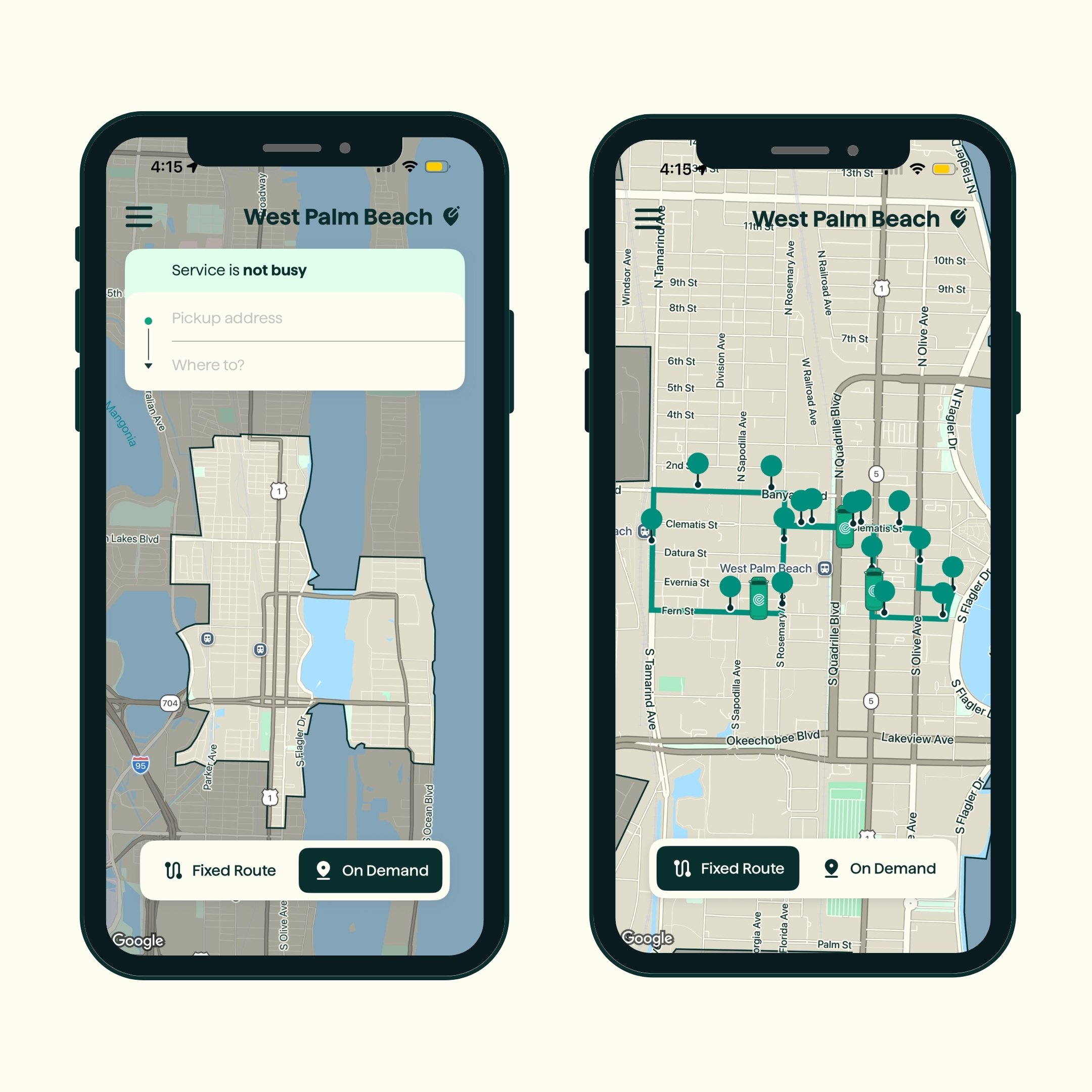
To make the process of evaluating when to implement one system over the other simpler, let's break it down into 3 things to consider when choosing between on-demand and fixed-route models.
1. Demand Patterns & Population Density
Where, when, and how consistently do people need to travel?
Fixed-routes work best in areas that have consistent rider patterns and a high density of people. Large cities like New York City often benefit from fixed-route models like the MTA, which can serve more than 4.6 million daily riders.
On-demand systems work better for communities that have more off-peak trips in lower density populations. Smaller cities, towns, and rural areas are more fit for on-demand transit. The Rockaways, NY, a community that lacks access to these larger transit options, benefited from the introduction of on-demand shuttles that help bridge these gaps in transit.
When it comes to deciding the best model of transit for a specific area, one option may be better than the other, but when thinking about broader transit systems, the combination of both models work together to ensure that the entire public is well-served.
2. Cost Efficiency & Scalability
Are vehicles running full, or running empty?
Fixed-routes offer predictable costs per mile and broad scalability, but they can be expensive to operate in areas where there isn’t a strong rider demand and shuttles tend to run empty.
On-demand services can concentrate service in smaller zones, which can lower subsidies and reduce expenses and underutilized vehicles.
The goal isn’t simply to save money but to use available funds where they deliver the greatest public benefit. Combining on-demand services in low-demand areas with fixed routes in high-demand zones is a great way to do this.
2. Equity, Accessibility, & Rider Experience
Are we designing for the riders who need transit most?
Fixed routes are familiar to the public, reliable, and easy to understand. They also tend to be accessible to those without smartphones.
However, these models are often implemented in areas with existing transit options, leaving lower-income communities and transit deserts unaccounted for.
On-demand systems can boost access for riders who lack personal vehicles or live in transit deserts far from major transit lines.
For example, Circuit’s programs in Trenton, NJ, GOTrenton!, and Washington, D.C., aim to connect under-served populations to jobs and essential services while our program in Chula Vista, CA, the Chula Vista Community Shuttle, works to improve senior mobility.
- • Learn about the award-winning program, GOTrenton!
- • Read about the Mobility Innovation District in Washington D.C.
- • Discover how the Chula Vista Community Shuttle Drives Senior Independence
Circuit’s program in New Rochelle, CircuitNR offers in-app ride calling as well as traditional ride-hailing with the wave of a hand to work around this barrier.
A transit system that fails to regularly serve seniors, people with disabilities, or low-income households falls short of its public mission. Transportation that blends the reliability and frequent service of fixed-route with the flexibility of on-demand often delivers the best overall user experience.
So... Which Is Better?
Ultimately, the decision isn’t if on-demand or fixed route is definitively “better”, it’s about understanding when and where each model works best, and how to build a transit system that allows them to complement each other. By doing this, cities can create transit networks that maximize access, transit resilience, cost efficiency, and community needs.
Contact us and learn more about which system is the best fit for your community.
.png)