
How do turnkey microtransit platforms improve first-mile and last-mile transit?
Turnkey microtransit platforms improve first-mile and last-mile transit by helping riders complete short transportation gaps between where they are and where they need to go. That can mean connecting a neighborhood to other public transit, helping employees reach an office park, or getting riders from their home to shopping, healthcare, or other nearby destinations.
In short, turnkey microtransit can help communities:
-
Connect riders with destinations that are just beyond easy walking distance
-
Extend the reach of existing transit, employment centers, and community destinations
-
Provide a flexible alternative to driving for short first-mile and last-mile trips
A city can have strong public transportation and still have a first-mile or last-mile problem. First-mile and last-mile trips are often short in distance, but difficult in practice. 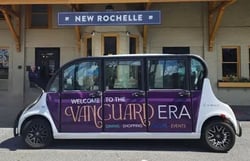
A rail station may be only two miles from a neighborhood. An office park may sit just beyond a bus route. A healthcare facility or shopping district may be close, but still hard to reach without a car.
If there is no easy way to travel those few miles, riders are left choosing between driving, finding parking, or skipping the trip altogether.
That is where turnkey microtransit can have a meaningful impact.
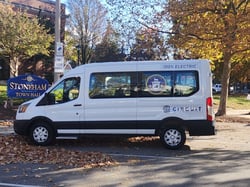 Instead of building large infrastructure for every neighborhood, communities can use turnkey microtransit to provide flexible, on-demand connections designed around local travel patterns and help riders get where they need to go.
1. Connect riders with destinations just out of reach
First-mile and last-mile transportation is often about solving the short trip between a rider and a destination that is nearby, but not easy to access.
That could include:
-
A neighborhood and a rail station
-
A transit stop and a workplace
-
A residential area and a healthcare facility
-
A parking area and a downtown district
-
A mobility hub and nearby shopping or services
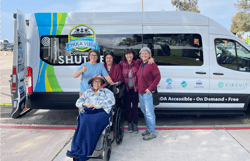 In Chula Vista, riders use Circuit to reach essential destinations like grocery stores, healthcare appointments, and other daily needs. The service is especially valuable for older adults and riders who may have limited transportation options, giving them a more accessible way to get around their community.
The Warner Center Circuit operates in the San Fernando Valley within the greater Los Angeles area. Riders use the service to reach destinations including Kaiser Permanente Woodland Hills Medical Center, grocery stores like Costco, shopping at Westfield Topanga and Topanga Village, parks, and major employment centers. 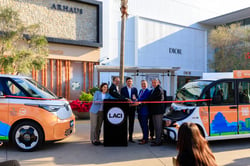 These trips may only span a few miles, but without a convenient transportation option, many of these destinations can still be difficult for the surrounding community to access.
In these communities, first-mile and last-mile transportation is not simply about reaching a train. It is about making nearby necessities and destinations genuinely accessible.
2. Bridge the gap between neighborhoods and existing transit
A bus route, rail station, or mobility hub does not have to reach every street to be useful. Microtransit can extend the practical reach of those services by connecting riders from surrounding neighborhoods and destinations.
A rail line can cover the longest portion of a trip, but riders still need an easy way to travel between the station and their home, hotel, workplace, or final destination.
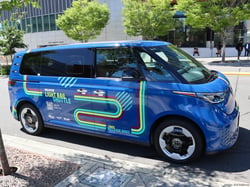 In Bellevue, Washington, BellHop originally launched to improve short-distance mobility downtown. As the service grew, the City of Bellevue and Amazon expanded it to connect riders with Bellevue Downtown light rail station. The service helps residents, workers, and visitors complete the portion of the trip that rail cannot cover on its own.
In New Rochelle, New York, Circuit connects riders with Metro-North and Bee-Line bus service while also supporting local trips throughout the community. 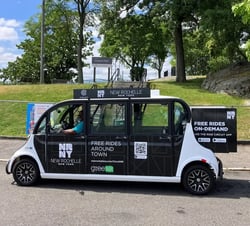 The service helps extend the reach of those existing transit options by giving riders an easier way to travel between the station, surrounding neighborhoods, and everyday destinations.
In both communities, the major transit infrastructure is already in place. Microtransit helps make that infrastructure more useful by closing the short distance between the transit network and where riders actually need to go.
3. Make short trips easier without a personal vehicle
Many first-mile and last-mile trips become car trips simply because there is no convenient alternative.
Someone may drive to a train station because it is too far to walk. A resident may drive a mile to a grocery store because there is no direct transit connection. Visitors may move their cars several times in one afternoon because destinations are spread across a downtown district.
Microtransit gives communities another option for those short trips.
In Long Beach, California, Circuit was initially launched to reduce parking pressure and provide easier access between downtown destinations. 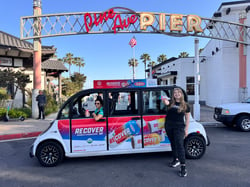 The service now connects Downtown and Belmont Shore with retail corridors, beaches, hotels, restaurants, transit hubs, grocery stores, senior housing, and medical facilities.
More than 8,000 passengers use the service each month, and the city specifically cites reducing short car trips and parking impacts as key goals of the program.
In Pompano Beach, Florida, the City is expanding its Circuit service with a new Fishing Village Shuttle connecting residents and visitors directly with the Fisher Family Pier and beach. 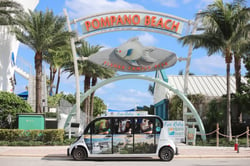 Riders within the expanded service area can request a trip from a home or business, while visitors coming from farther away can park for free at City Hall or Old Town and take Circuit the rest of the way to the beach. The weekend service is designed in part to reduce parking demand near the beach while making the area easier to access.
It is a clear example of first-mile and last-mile transportation solving a short but meaningful gap. Riders do not need a new major transit route to reach the beach. They need an easy way to complete the final few miles of the trip without bringing a car all the way to their destination.
Why does a turnkey microtransit model matter for first-mile and last-mile transit?
Closing these gaps requires more than routing software. Cities need vehicles, drivers, dispatching, service planning, customer support, maintenance, technology, and performance data working together.
A turnkey microtransit provider manages those pieces as one service. Circuit combines the technology, vehicles, W-2 drivers, operations, and reporting required to launch and operate microtransit, allowing communities to design service around the transportation gaps they are actually trying to solve.
That might mean connecting residents to a rail station in one market, helping seniors reach medical appointments in another, or reducing short car trips around a busy downtown.
Frequently asked questions
⚡What is first-mile and last-mile transit?
First-mile and last-mile transit refers to transportation that helps riders complete the beginning or end of a trip. It can include connections between homes, public transit, workplaces, healthcare, shopping, downtown districts, and other nearby destinations.
⚡Is first-mile and last-mile transit only about connecting to buses and trains?
No. Transit connections are one major use case, but first-mile and last-mile transportation can also help riders complete short trips between neighborhoods and everyday destinations that are difficult to reach without a car.
⚡How does microtransit improve first-mile and last-mile transportation?
Microtransit provides flexible transportation within a defined service area, allowing communities to connect riders with destinations and transit hubs that may be too far to walk or poorly served by fixed routes.
⚡Does microtransit replace fixed-route transit?
Not necessarily. Microtransit can complement buses and trains by extending their reach, while also serving short local trips that do not fit neatly into an existing fixed-route network.
Closing the short gaps that make a big difference
First-mile and last-mile transportation problems are not always about long distances. Often, the destination is already close.
The challenge is making those last few miles easy enough to travel.
By connecting residents with transit, jobs, healthcare, groceries, shopping, and other everyday destinations, turnkey microtransit can help communities fill the gaps that determine whether people can get where they need to go.
Reach out to our team to learn more about Circuit's turnkey microtransit service and solutions.
Learn More About Circuit and Our Service Impact
• Circuit Champions: The People Moving Cities: Yvette Drucker
• Pregnant in Trenton? This electric shuttle service is offering free rides
• Driving Independence: Senior Mobility in Chula Vista
• Reconnecting the Rockaways: Affordable Mobility for an Underserved Community
.png)