
What microtransit software works best for on-demand city shuttles?
The best microtransit software for city shuttles combines real-time routing, ride pooling, accessible booking, dispatch management, and performance reporting. For cities evaluating on-demand transportation, the right technology should make it easier to manage service, improve efficiency, and respond to changing community needs.
Software is only one piece of a successful microtransit program. Cities need to consider how the technology connects with vehicles, drivers, daily operations, and existing public transportation.
Here are five questions municipalities and transit agencies should ask when evaluating microtransit software and service providers.
1. Does routing adapt to real-time demand?
Unlike traditional fixed-route transportation, on-demand microtransit uses technology to match ride requests with available vehicles and adjust routes based on passenger demand. 
Strong microtransit routing software should support multiple passengers traveling in similar directions, helping operators serve more riders efficiently without requiring every trip to operate individually.
For city shuttle programs, this means looking for technology that can:
-
Dynamically adjust routes based on ride requests
-
Pool passengers with compatible trips
-
Manage pickup locations and vehicle capacity
-
Support efficient dispatching as demand changes
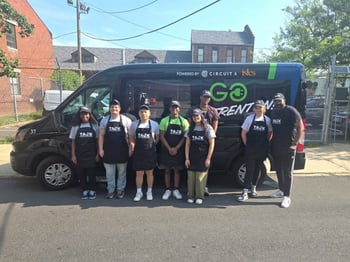 In Trenton, New Jersey, more than 60% of Circuit rides are shared or pooled, demonstrating how on-demand routing technology can efficiently match passengers traveling in similar directions. By combining trips, Circuit helps maximize vehicle capacity and serve more riders with its existing fleet.
Why it matters: Routing technology directly influences wait times, shared ridership, vehicle utilization, and the overall cost of operating a microtransit program.
2. Are there accessible booking options for every rider?
While mobile apps are an important part of modern on-demand shuttle services, cities need to consider riders who may not have smartphones, reliable internet access, or experience using transportation apps. 
The best microtransit booking platforms should also make it easy for riders to access transportation across communities. A single app that supports multiple service areas creates a more connected rider experience, allowing residents and visitors to use familiar technology when traveling to a different city.
When evaluating microtransit booking software, cities should consider whether the provider supports:
-
Convenient mobile trip requests
-
Alternative booking options, including phone support
-
Clear pickup instructions and ride information
-
Accessible transportation options for riders with disabilities
-
A consistent booking experience across multiple communities
-
A simple experience for residents, employees, and visitors
⚡ The Circuit Impact: Costa Mesa, CA
 Costa Mesa's free, all-electric microtransit service gives riders the flexibility to request transportation through the Ride Circuit app or by phone. Because the Ride Circuit app connects riders to Circuit-operated services across the country, someone familiar with the service in Costa Mesa can use the same app when visiting another Circuit community, without needing to download or learn a new platform.
Why it matters: Accessible, consistent booking technology makes microtransit easier to use, both within a community and across city boundaries. A familiar app experience removes barriers for residents and visitors while helping cities offer transportation that feels connected beyond their individual service areas.
3. Can cities use real-time reporting to improve service?
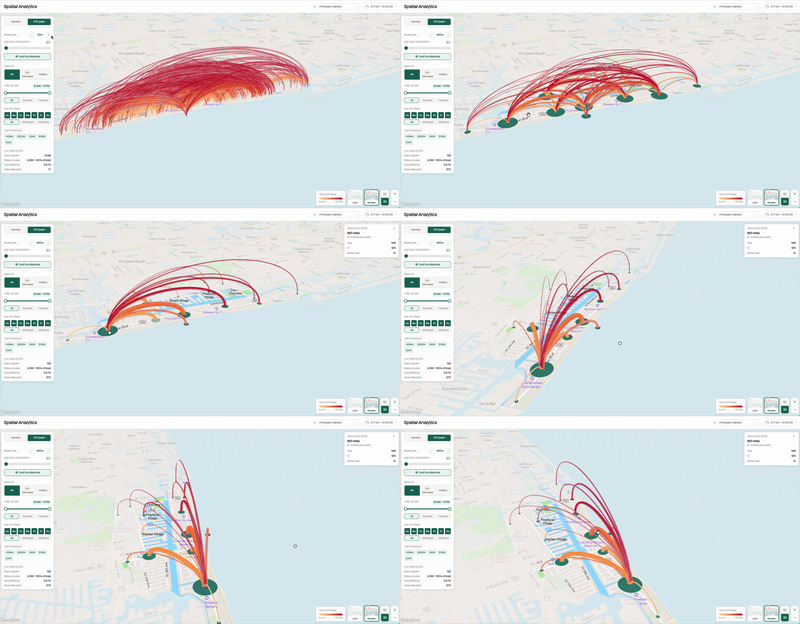 Launching a microtransit program is only the beginning. Cities need to understand how their investment is performing and where adjustments could improve the service.
The best microtransit management platforms give municipalities access to useful operational data rather than relying solely on periodic summaries.
Important microtransit performance metrics include:
-
Total ridership and trip demand
-
Average pickup and wait times
-
Shared ride rates
-
Popular destinations and trip patterns
-
Vehicle utilization
-
Rider satisfaction
⚡ The Circuit Impact: Long Beach, CA
 Circuit's Long Beach microtransit program has grown from a small pilot to a five-square-mile service area providing more than 8,000 passenger trips per month. As demand has increased, the city has expanded its fleet, added ADA-accessible vehicles, and extended service coverage, demonstrating how ridership insights can help guide transportation investments.
Why it matters: Operational insights help cities make informed decisions about service boundaries, fleet sizes, operating hours, and program investments.
Circuit provides municipal partners with access to real-time microtransit data, reporting, and insights to help them understand how their services are performing and where opportunities for improvement exist.
4. Does technology support existing public transportation?
The goal of a city shuttle program should be to strengthen the local transportation network, not create another disconnected service. 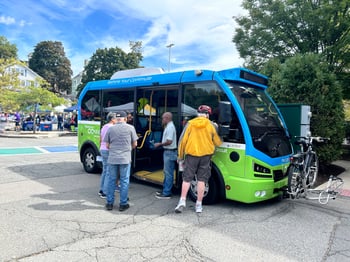
Microtransit can help cities extend the usefulness of existing transit by connecting neighborhoods, employment centers, shopping districts, and other destinations to bus and rail networks.
When comparing microtransit technology providers, cities should ask how the platform supports:
-
First-mile and last-mile transportation
-
Connections to bus stops and rail stations
-
Flexible service areas and operating hours
-
Neighborhood and downtown circulation
-
Adjustments based on changing travel patterns
⚡ The Circuit Impact: New Rochelle, NY
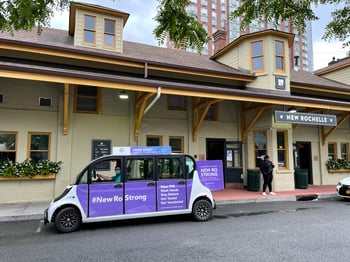 Circuit's on-demand microtransit program in New Rochelle has delivered 200,000+ rides, connecting residents with local destinations and existing transportation, including Metro-North and Bee-Line services. The program demonstrates how flexible, technology-supported transportation can complement established transit networks.
Why it matters: Connecting local shuttles with existing public transportation helps cities extend mobility options without requiring an entirely new fixed-route network.
5. Can a provider deliver more than software?
One of the most important questions cities can ask is whether they need microtransit software or a partner to manage the complete transportation service. 
Some microtransit technology providers focus primarily on routing, booking, and dispatch software. Under that model, the city or transit agency may still be responsible for acquiring vehicles, hiring drivers, maintaining the fleet, and managing operations.
A turnkey microtransit provider brings those responsibilities together.
Circuit combines microtransit technology with the people and operations needed to run the service. Our turnkey model includes:
-
100% electric vehicles
-
Professional W-2 drivers
-
Service planning and daily operations
-
Fleet management and maintenance
-
Rider booking and routing technology
-
Performance reporting and operational insights
-
Local launch and rider outreach support
⚡ The Circuit Impact: Hollywood, FL
 When Hollywood partnered with Circuit, the city replaced three underutilized diesel buses with ten on-demand electric vehicles. By combining technology, fleet operations, and flexible service design, the program achieved an 80%+ reduction in cost per rider compared with its previous service.
Why it matters: Choosing a turnkey partner can help cities launch or expand microtransit without building a new transportation operation from the ground up.
Microtransit software vs. turnkey microtransit: What's the difference?
Both models can support effective on-demand city shuttle programs. The right choice depends on a municipality's existing resources, staffing, budget, and transportation goals.
|
Consideration |
Software-only model |
Turnkey model |
|
Booking and routing technology |
Provided |
Included |
|
Vehicles |
City or separate operator |
Managed by provider |
|
Drivers |
City or separate operator |
Managed by provider |
|
Fleet maintenance |
Separate responsibility |
Included |
|
Daily operations |
City or contracted operator |
Managed by provider |
|
Performance reporting |
Typically available |
Included with operational support |
For agencies with established fleets and operations teams, software-only solutions may be the right fit.
For municipalities looking to launch or expand on-demand transportation with fewer internal operational responsibilities, a turnkey model can offer a more comprehensive solution.
Choosing the right microtransit technology for your city
The best microtransit software is not necessarily the platform with the most features. It's the technology that supports the transportation service a community actually needs.
Cities should evaluate how routing, booking, accessibility, reporting, and operations work together to deliver reliable, efficient transportation.
With more than 12 million rides delivered across its history, Circuit brings together technology, local operations, and an all-electric fleet to help communities build transportation services that work for their residents.
Looking to bring on-demand microtransit to your city?
Connect with Circuit to explore how our turnkey electric transportation solutions can support your community's mobility goals.
Learn More About Circuit and Our Service Impact
• Circuit Champions: The People Moving Cities: Yvette Drucker
• Pregnant in Trenton? This electric shuttle service is offering free rides
• Driving Independence: Senior Mobility in Chula Vista
• Reconnecting the Rockaways: Affordable Mobility for an Underserved Community
