
Last month, we attended Broward Metropolitan Planning Organization (MPO)’s Safe Roads Summit 2026 along with other transit leaders, city teams, and mobility partners to discuss how transportation can make communities safer and more vibrant.
Through a combination of workshops, tabling events, and panel discussions we got to exchange thoughts on topics ranging from roadway design and infrastructure planning to emerging technologies and strategies to advance Vision-Zero goals.
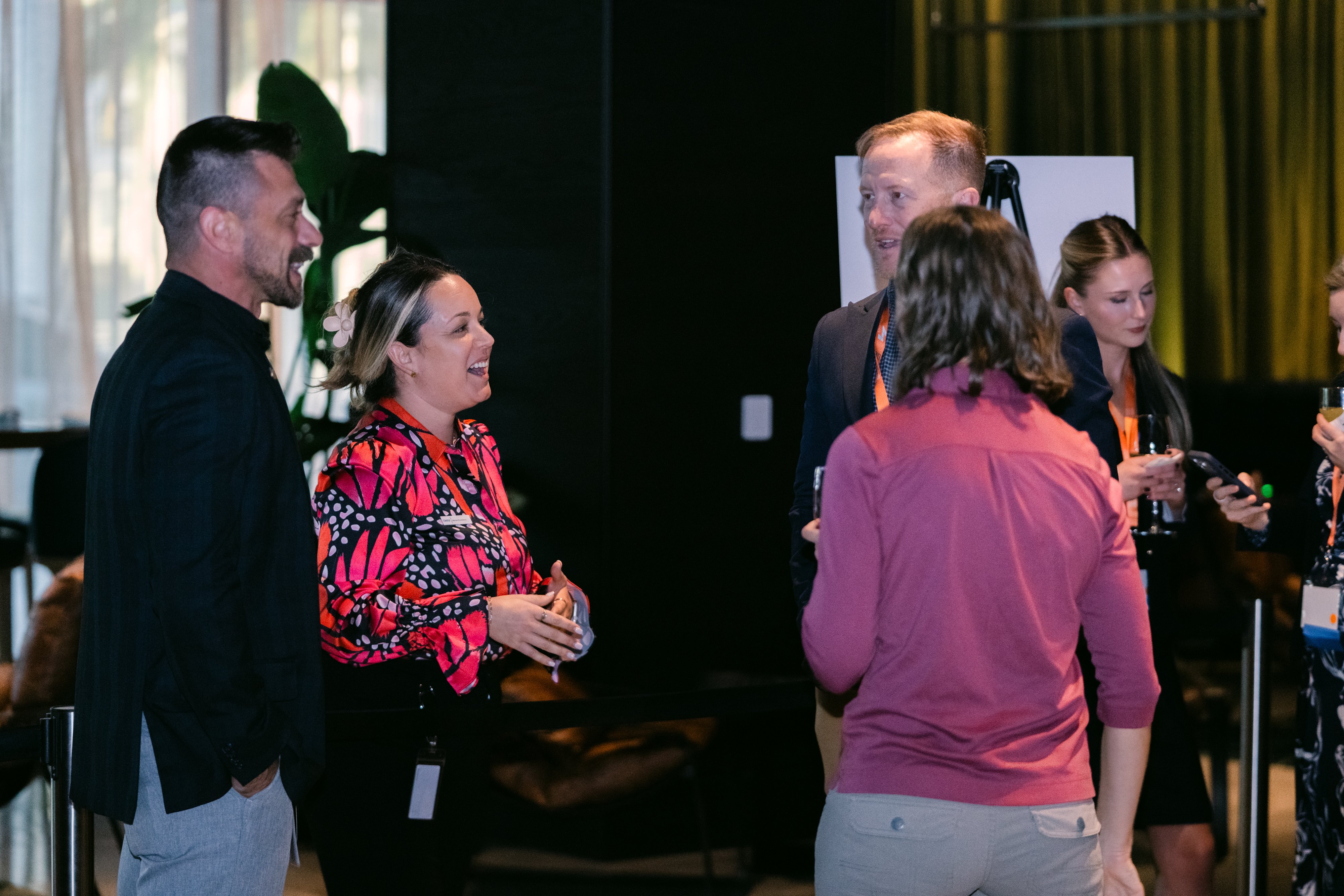
As a part of the event, Circuit provided attendees with free, all-electric rides to the event space. We were thrilled to participate in this summit and were excited to share our service with the industry.
Here Were Our Three Biggest Takeaways:
1. Multi-Modal + User-First = Better Solutions
Conversations throughout the summit highlighted that multi-modal options and user-friendliness are two undeniable elements of safe transit systems.
Offering various forms of transportation that work in tandem helps cities reduce congestion that leads to accidents, improve local air quality and public health, ensure social equity by offering affordable options that solve for first- and last-mile gaps, and increase overall long-term transit resilience.
Multi-modal transit goes hand in hand with user-friendliness. When transportation is made with the user-experience in mind, it transforms from a utility into an amenity.
Intuitive, frequent, and comfortable transit improves trust and encourages ridership, which further reduces traffic congestion and advances the benefits of multi-modal transportation outlined above.
At Circuit, many of our microtransit programs aim to work with existing transit to achieve this type of multi-modal masterpiece.
For example, our newest program RedLink, in Redmond, WA (launching this month) is being implemented to connect passengers to the Link light rail system and add support to the City’s existing transit as the local population grows.
Additionally, we combine in-app and traditional street-ride hailing options to ensure we can always reach our passengers, with or without a phone.
These are just a few examples of the real ways that multi-modal and user-friendliness can transform transportation into something smarter, safer, and better.
2. Driving Forward, Safely & Smartly: Utilizing Tech & Data Advances
Technological and data advances in the industry have improved some of the following road safety tools:
- • Predictive analysis: the use of historical data to identify patterns and relationships between variables that can be used to predict future outcomes.
A transportation official might use predictive analysis to understand the relationship between certain types of roads and car accidents. This official can then use data-driven decision making to decide what type of road will mitigate the most risk for their community.
- • Corridor modeling: the process of creating dynamic 3D models of linear infrastructure (roads, highways, etc.). When the horizontal or vertical geometry of the model is changed, the entire 3D model is automatically updated.
Corridor modeling is a powerful tool that enables the precise visualization of physical infrastructure which helps transportation officials minimize construction errors and improve the overall infrastructural integrity of their projects.
- • Digital visualization tools: software that transforms raw numerical data into graphs, charts, maps, and other formats.
Digital visualization tools allow people to present information in a digestible and interactive way to audiences with technical and non-technical background knowledge. These tools are especially useful for highly specialized or siloed professionals, like transportation officials, to use when presenting to diverse public audiences.
Each of these technologies help transit actors make informed decisions about infrastructure and safety while allowing passengers a way to better understand and trust their transit networks. These tools improve ridership and the overall public benefit of any given transit system.
At Circuit, we consistently improve and renew technology and data from updating our pooling algorithm to exploring AV options.
Using these advances is crucial to achieving smart, safe roads.
3. Team Work Makes the Dream Work: Regional Collaboration
Vision Zero, a global strategy to eliminate all traffic-related fatalities and severe injuries, is only achievable through collaboration.
Partnerships across jurisdictions allow for data sharing and clear, coordinated strategies and safety initiatives that reduce roadway fatalities.
These networks accelerate public well-being and create connected, livable transportation networks.
We saw the value of this type of team-work in action at the Safe Roads Summit during conversations among the Broward Metropolitan Planning Organization (MPO), the Palm Beach Metropolitan Planning Organization (MPO), and the Miami-Dade Transportation Planning Organization (TPO) who are making roads safer for the 6 million residents and 50 million visitors who travel through South Florida every year.
As South Florida transit partners, we were proud to be a part of those discussions.
Learn more about out our South Florida programs:
- • Boca Raton
- • Boynton Beach
- • Fort Lauderdale / Fort Lauderdale NW
- • Lake Worth Beach
- • Lauderdale-By-The-Sea
- • Miami
- • Pompano Beach
- • The Garden’s Mall
- • West Palm Beach
- • Wilton Manors
Hungry for More Transportation Takeaways?
Join Circuit at Tomorrow.City USA, the country’s leading event on urban innovation and hear CEO Alex Esposito and other transit leaders talk about transportation’s role in urban futures.
Get your tickets now and meet us in West Palm Beach, FL on April 14, 2026.
.png)