
Industry
City Governments
A city-CRA partnership built to fill the gap between South Florida's transit network and the people who depend on it.
Lake Worth Beach sits one stop from West Palm Beach on Tri-Rail, one of Palm Beach County's busiest commuter rail lines, and less than three miles from the ocean. For years, that 2.5-mile stretch between the station and the beach was exactly the kind of gap that makes or breaks a transit network. In March 2024, the City of Lake Worth Beach and its Community Redevelopment Agency launched a fully managed, on-demand electric microtransit program with Circuit to close it.
At a Glance:
- Launch Date: March 2024
- Partners: City of Lake Worth Beach and Lake Worth Beach CRA
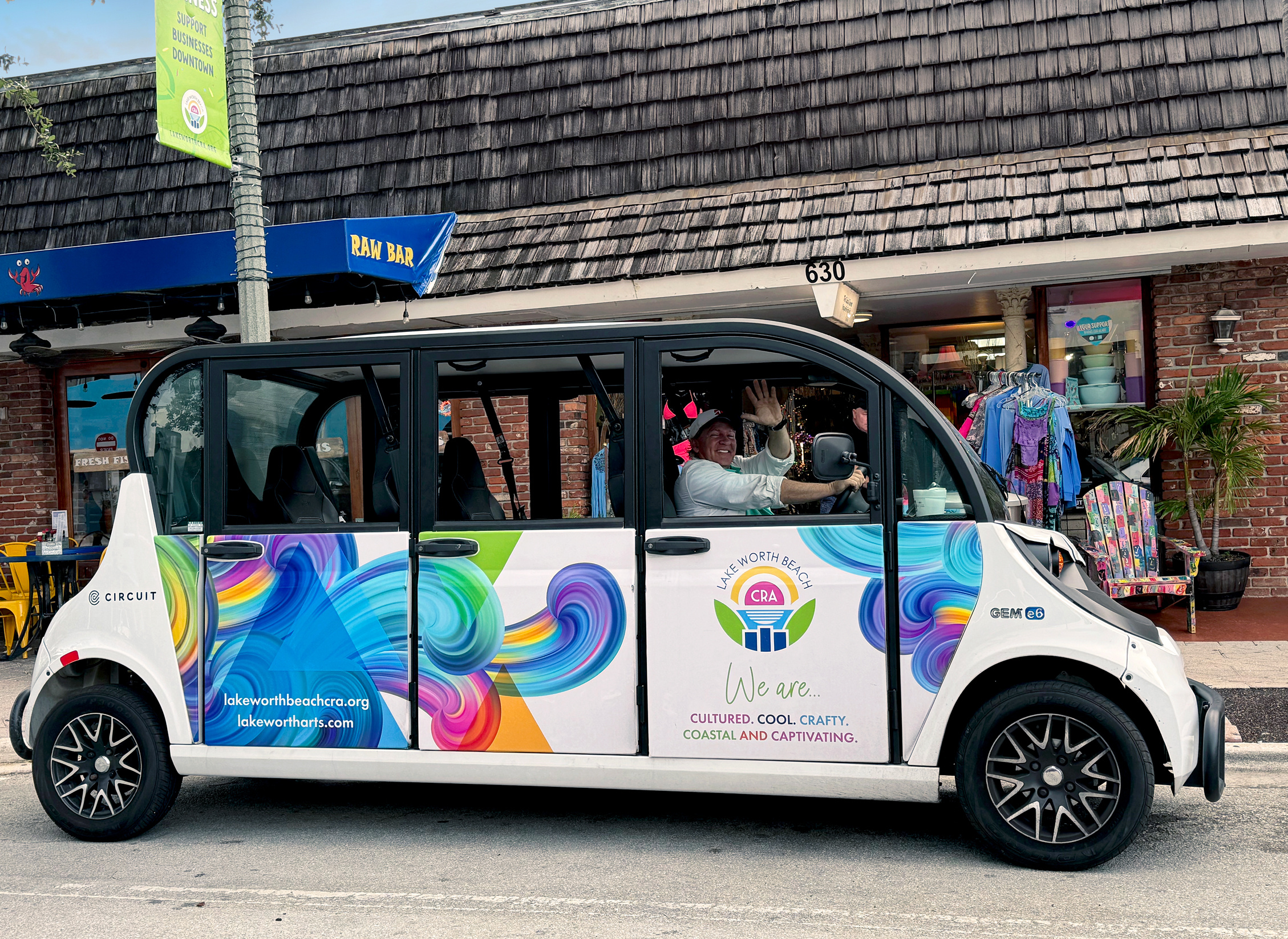
- Fleet: 100% electric, Ford E-Transit vans and Neighborhood Electric Vehicles (NEVs)
- Coverage: Geofenced zone from the Tri-Rail Station west to the beach, 7th Avenue North to 6th Avenue Sout
Challenge: A Transit Network With a Gap No One Had Filled
Lake Worth Beach has more transit infrastructure than most small Florida cities. Tri-Rail, Palm Tran bus service, and Brightline all run through or near the area. But infrastructure and connectivity are different things. As Joan Oliva, Executive Director of the Lake Worth Beach CRA, put it in a 2024 memorandum: "South Florida has never been known as a place for superior transit. Despite the fact that the area has Tri-Rail, bus service, Palm Tran, and now Brightline, connectivity from these services to the heart of inner cities, especially those on the coast, is, at best, mediocre."
The 2.5-mile stretch between the Tri-Rail station and Lake Worth Beach's downtown core and coastline had no reliable, low-cost way to cross it without a car. Residents who depended on rail to get to work were stranded at the platform. Visitors arriving by train had no easy way to reach the beach, the restaurants, or the shops. The gap wasn't a planning failure so much as a known problem without a practical answer, until the city and CRA decided to build one.
Solution: One Service, Two Partners, One Clear Purpose
The City and CRA structured the program as a public-private partnership, splitting the initial operating cost, with fare revenue and vehicle advertising helping offset costs over time.
Circuit designed and operates the service within a defined zone that runs from the Tri-Rail station east to the beach, connecting riders to downtown restaurants, shops, the City Golf Course, and the coastline. The fleet is 100% electric, mixing Ford E-Transit vans for fixed-route coverage with smaller Neighborhood Electric Vehicles for on-demand trips. Rides cost $1 per person, keeping the service accessible to daily commuters, transit-dependent residents, and visitors alike. 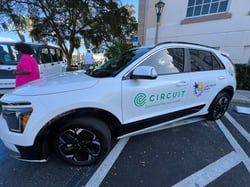
Riders can request a trip through the Ride Circuit app or simply wave down a driver. All drivers are local W2 employees, not gig workers, which means consistent, accountable service every day the program runs.
Results: A Program That Keeps Growing
When the service launched in March 2024, monthly ridership was just under 200 passengers. By March 2026, that number had grown to over 2,200 in a single month, more than a tenfold increase in two years. The growth wasn't a spike. The ridership chart shows a program that built steadily through its first year and accelerated into its second, with unique monthly users now holding at 842 and still climbing.
The single largest driver of that growth, according to CRA reporting, was the inclusion of the Tri-Rail station as a primary stop. Commissioner Reinaldo Diaz noted the connection directly: "We have one of the highest riderships to Tri-Rail, so this should provide the 'last mile' to our residents." The data has backed that up. Residents are using the service repeatedly, not just occasionally, which reflects a community that has built the shuttle into how it moves.
 Rider satisfaction has stayed high throughout. The average rating across the program sits at 4.94 out of 5. The all-electric fleet reduces greenhouse gas emissions and removes short car trips from Lake and Lucerne Avenues, two of the city's most congested corridors. And by connecting riders directly to local businesses, the beach, and downtown destinations, the service supports the economic activity the CRA was built to encourage.
Ready to get started?